
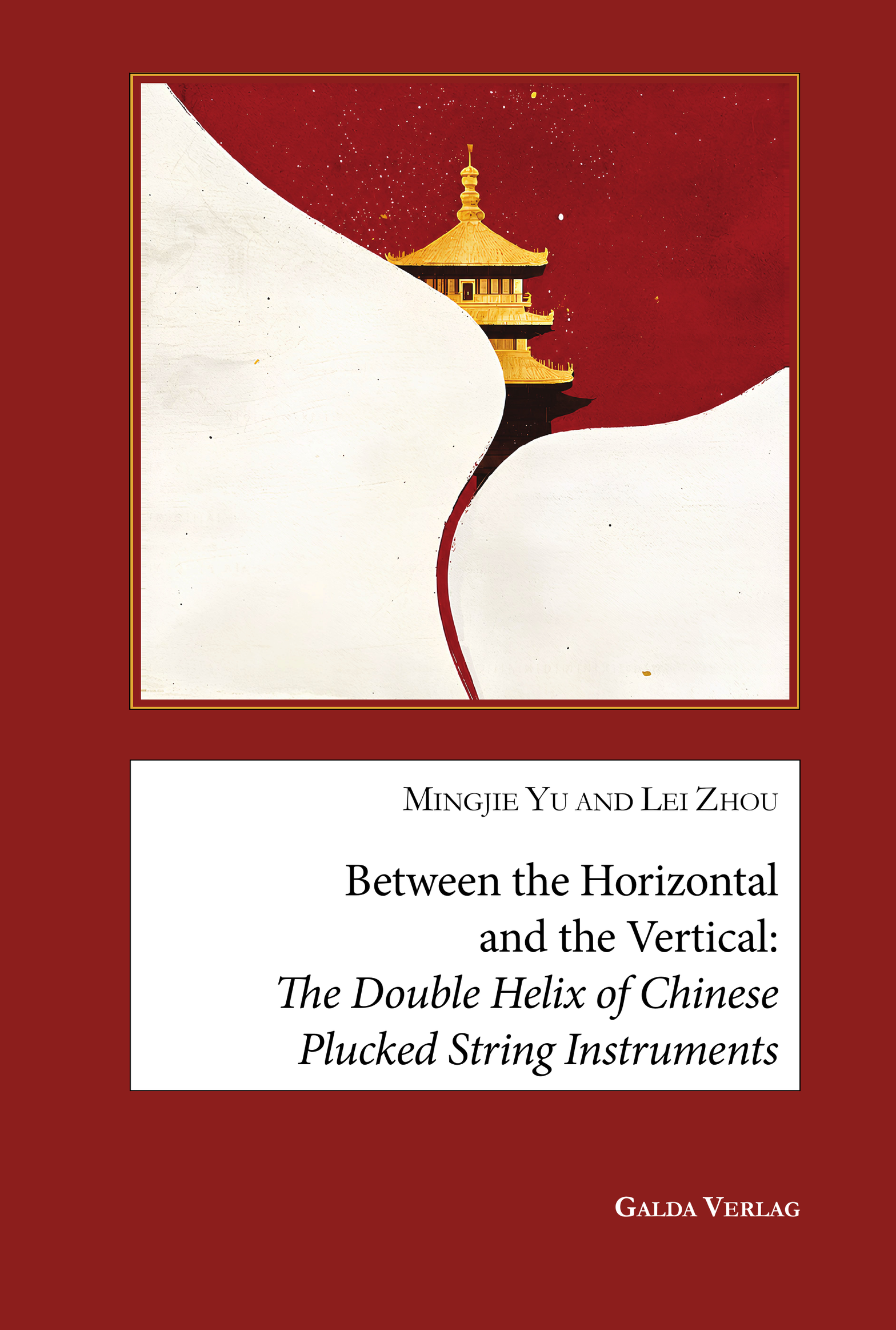
Between the Horizontal and the Vertical: The Double Helix of Chinese Plucked String Instruments
118,00 €
Your Legal Guarantee Rights

A comprehensive comparative history of China’s plucked string instruments from antiquity to the present. The book advances a “double helix” model of two intertwined lineages: the horizontal tradition (guqin, guzheng), indigenous to China and rooted in ritual-music and literati culture; and the vertical tradition (konghou, pipa, ruan, sanxian), transmitted along the Silk Road and re-created as authentically Chinese instruments. Drawing on archaeological finds, surviving tablatures, Dunhuang and Kizil murals, and dynastic treatises, it examines each instrument’s origins, formal features, technique and aesthetics, canonical repertoire, and cultural value across three parts and eight chapters, and concludes with the mutual learning of the two traditions and their contemporary transmission and global dissemination. Written for musicologists, conservatory students, and general readers, with key terms given bilingually, it serves both as an accessible introduction and a scholarly reference on Chinese music, organology, and cross-cultural exchange.
Lei Zhou is a Ph.D. candidate at the Penderecki Academy of Music in Poland, a resident musician of the Asian Youth Artists Association (AYAA), and Executive Vice President of its Konghou and Harp Art Committee. Her research interests cover the transplantation of konghou and harp repertoire and intangible cultural heritage.
>Mingjie Yu is the Head of the Ethnic Instruments Department at the School of Music, Hebei Normal University, a guzheng teacher, and a Ph.D. candidate at the Penderecki Academy of Music in Poland. She is also Vice President of the Hebei Qin Association, Honorary President of the Guzheng Committee of Shijiazhuang Musicians Association, and founder of the Shuiyue Zheng Ensemble. Her research interests cover the history of qin and zheng, instrument structural reform, and zheng composition.
TABLE OF CONTENTS
PREFACE i
ACKNOWLEDGMENTS v
A READER’S GUIDE vii
Part I: Horizontal Plucked Instruments: Native Cultural Music Line
Chapter 1: The Guqin — An Instrument of the Literati Spirit 3
Section 1: Origins of the Guqin and Its Historical Development 4
1.1 An Overview of the Guqin 4
1.2 Legends of the Guqin’s Origins 4
1.3 The Historical Development of the Guqin 6
Section 2: The Construction, Qin-Making Craft, Mathematical System, and Tuning System of the Guqin 20
2.1 The Principal Classic Qin Forms 20
2.2 Overall Construction, Standard Dimensions, and Traditional Materials 22
2.3 Qin-Making Craft and the Culture of Lacquering 24
2.4 The Mathematical System of the Thirteen Hui 27
2.5 String Tuning, Range, and the Classic Modes 29
Section 3: Core Tone Colors, Performance Techniques, the Jianzipu System, and Performance Posture 31
3.1 The Core Tone-Color System of the Three Forces: Heaven, Earth, and Humanity 31
3.2 The Core Techniques of the Right and Left Hands 32
3.3 The Jianzipu System and a Guide to Reading It 34
3.4 Performance Posture and Performance Forms 40
Section 4: Guqin Schools, Classic Repertory, and the Lineage of Master Qin Players 42
4.1 The System of Guqin Schools 42
4.2 Analysis of Classic Repertory 48
4.3 The Lineage of Master Qin Players 55
Section 5: The Humanistic Aesthetics of the Guqin and Famous Transmitted Qins 64
5.1 The Core Aesthetic Thought of the Guqin 64
5.2 Aesthetic Theory and Qin Tablatures through the Ages 67
5.3 The Culture of Famous Qins 77
Chapter 2: Guzheng — An Instrument Uniting Elegance and Popular Appeal 89
Section 1: The Origin and Historical Development of the Guzheng 90
1.1 The Origin of the Guzheng 90
1.2 The Historical Line of Development 92
1.3 Construction and Materials 104
1.4 Tuning and Pitch System 107
Section 2: The Structure and Tuning of the Guzheng 109
2.1 The Form of the Standard Zheng 109
Section 3: Performing Techniques and Notation 110
3.1 Posture and Performance Contexts 110
3.2 Right- and Left-Hand Techniques 122
3.3 Notation Systems 129
Section 4: Schools, Repertory, and Masters 133
4.1 The Traditional Schools 134
4.2 Classical Repertory 138
4.3 The Masters of the Guzheng 143
Section 5: Modern Formal Reform and East Asian Related Transmission 156
5.1 Modern Domestic Formal Reform 156
5.2 East Asian Related Zither Instruments 160
Section 6: The Humanistic Aesthetics of the Guzheng 161
6.1 The Beauty of Form: Round Heaven and Square Earth, and the Three Powers of Heaven, Earth, and Human 161
6.2 The Beauty of Timbre: Supplementing Melody with Ornamental Nuance, and the Breath of Dialects 162
6.3 The Beauty of Works: Literati Imagery and Secular Drama 163
6.4 The Beauty of Performance: Body-Mind Unity and the Co-Sensory of Sight and Sound 163
Chapter Summary 164
Part II: Vertical Plucked Instruments: Silk Road Integrated Music Line
Chapter 3: Konghou: The Aesthetic Imagery of Dunhuang 169
Section 1: Transnational Dissemination and Regional Divergence in Form 169
1.1 The Foreign Origins and Early Forms of the Konghou 170
1.2 The Silk Road Route of the Konghou’s Introduction into China and Its Early Development 173
1.3 The South Asian–Southeast Asian Transmission Lineage of the Konghou Family 177
1.4 The Systemic Differentiation of the Chinese Horizontal and Vertical Konghou 180
1.5 The Routes of Konghou Transmission in East Asia and Regional Differences in Localization 187
Section 2: Evolution of Form and Visual Aesthetics 190
2.1 Han and Wei Periods: Indigenous Form and Unadorned Aesthetics in the Early Stage of Transmission to China 191
2.2 Sui and Tang Periods: Balanced Form and Ornate Aesthetics at the Height of Development 193
2.3 Song, Yuan, Ming, and Qing Periods: Simplification of Form and the Restrained Evolution of Aesthetic Transmission 196
2.4 Contemporary Konghou: Reconstruction of Form and Aesthetic Reconfiguration 199
2.5 Core Artistic Characteristics of Konghou Visual Aesthetics 201
Section 3: Performance Techniques and Timbre 202
3.1 Five Traditional Techniques of the Ancient Konghou and the Traditional Performance Paradigm 203
3.2 Five Expanded Contemporary Techniques and the Completion of the Technical System 204
3.3 Core Differences in Technique and Timbre between the Chinese Konghou and the Western Harp 206
3.4 The Eastern Aesthetic Connotations and Artistic Expressive Power of Konghou Timbre 207
Section 4: Classical Repertoire and Contemporary Revival Practices 209
4.1 Surviving Ancient Konghou Repertoire and the Traditional Musical Context 210
4.2 Modern Reconstruction of Konghou Repertoire and Traditional Adaptations 211
4.3 Contemporary Original Works and the Modern Repertoire System 213
4.4 Leading Contemporary Konghou Artists and Their Contributions to the Field 214
Section 5: The Core Interpretation of the Aesthetic Beauty of Dunhuang Imagery 216
5.1 The Six-Character Core Definition of Konghou Aesthetics 217
5.2 The Ultimate Artistic Interpretation of the Aesthetic Beauty of Dunhuang Imagery 218
Chapter 4: The Pipa — The Sound of Silk Road Civilization 221
Section 1: Historical Origins and Development in China 224
1.1 The Origin of the Pipa 224
1.2 Scholarly Debates on the Origin and Naming of the Pipa 231
1.3 The Course of Development in China 233
Section 2: Form and Construction 245
2.1 Differences between Ancient and Modern Forms 245
2.2 Structure and the Function of the Parts 247
2.3 Craftsmanship and Materials 251
2.4 Comparative Evolution of Formal Parameters 254
Section 3: The Transmission and Development of Performance Techniques 256
3.1 Overview Table of Performance Techniques 256
3.2 The Development of Performance Techniques 257
3.3 The Principal Performance Techniques 258
3.4 Playing Posture and Method 263
3.5 Comparison with the Western Lute and Guitar 265
Section 4: Schools and Representative Figures 266
4.1 The Formation of the Schools 266
4.2 The Northern School 267
4.3 The Southern School 269
4.4 The Principal Schools of the Modern Era 270
4.5 Fusion of the Schools and Modern Development 273
4.6 Representative Figures 274
Section 5: Classic Repertory and Cultural Meaning 277
5.1 Overview of the Repertory System 277
5.2 Traditional Pieces before 1949 (Six Classics) 278
5.3 Modern Works after 1949 (Six Classics) 282
Section 6: Humanistic Aesthetics and Contemporary Transmission 286
6.1 Humanistic Aesthetic Content 286
6.2 The Value of Cultural Exchange 288
6.3 Cultural Value 289
Chapter Summary 290
I. Commonalities with the Horizontal Instruments 290
II. Principal Differences from the Horizontal Instruments 291
III. Position in the Dual-Helix Framework 292
IV. Concluding Remarks 293
Chapter 5: The Ruan — The Elegance of the Bamboo Grove Literati 295
Section 1: Historical Origins and Development 296
1.1 The Wei-Jin Origin: The Bamboo Grove Worthies and the Birth of Ruan Music 296
1.2 Transmission through the Dynasties and Modern Systemic Reconstruction 301
Section 2: Form and the Ruan Family of Instruments 309
2.1 The Basic Structure and Parts of the Ruan 310
2.2 The Five Members of the Ruan Family: Form and Timbre 312
2.3 Core Structural Advantages of the Ruan Family 315
Section 3: Performance Techniques and Ensemble Value 316
3.1 Core Techniques and the Logic of Timbre 317
3.2 The Core Ensemble Value in the National Orchestra 319
Section 4: Repertory and Representative Figures 320
4.1 Representative Pieces 321
4.2 Modern and Contemporary Works, Ensembles and Chamber Music 323
4.3 Representative Figures 324
Section 5: Humanistic Aesthetics and Contemporary Transmission 326
5.1 The Elegance of Form: Simplicity, the Mean, and Nature 327
5.2 The Elegance of Timbre: Warmth, the Mean, and Stillness 327
5.3 The Elegance of Spirit: Bamboo Grove Bearing and the Transmission of the Literati Lineage 328
5.4 Contemporary Plural Paths of Transmission and Vitality 329
Dual-Helix Summary of This Chapter 330
I. What the Ruan Shares with the Horizontal Instruments 331
II. Principal Differences from the Horizontal Instruments 332
III. The Position of the Ruan in the Dual-Helix Framework 333
Chapter 6: The Sanxian — The Charm of Secular Culture 335
Section 1 Historical Origins and Development 336
1.1 The Origin and Early Folk Formation 336
1.2 Ming-Qing Divergence of North and South and Deep Popular Rooting 342
1.3 Multi-ethnic Nationwide Transmission and Deep Folk Fusion 344
Section 2 Form and Construction 346
2.1 The Extremely Simple, Practical Structure and Folk Design Logic 346
2.2 The Secular Artistic Advantages of the Fretless Open Structure 349
2.3 The Plain and Transparent Native Timbre and Secular Aesthetic Fitness 350
Section 3 Performance Techniques and Application Scenes 352
3.1 The Free, Easy Folk Performance Style Centered on the Secular 353
3.2 The Core Accompaniment Function in Han Opera and Narrative Singing 355
3.3 All-Scene Adaptation for Multi-ethnic Folk Music and Dance 356
Section 4 Classic Repertory and Representative Transmitters 357
4.1 Systematic Compilation and Living Preservation of Traditional Folk Repertory 358
4.2 Modern and Contemporary Solo Works: Creative Breakthroughs and Artistic Independence 359
4.3 Contemporary Transmission Paths: Ensembles, Chamber Music, and Crossover 361
4.4 Representative Transmitters 362
Section 5 Humanistic Aesthetics and Contemporary Transmission 366
5.1 The Secularity of Form: Simplicity and Utility 366
5.2 The Secularity of Timbre: Plainness, Transparency, Liveliness, and Authenticity 367
5.3 The Secularity of Spirit: The Myriad Scenes of the Marketplace and Folk Hearth Smoke 367
5.4 Contemporary Plural Transmission Paths and Vitality 368
Dual-Helix Summary of This Chapter 369
I. Differences between the Sanxian and the Horizontal Instruments 369
II. Similarities and Differences with Vertical Instruments such as the Pipa and Ruan 370
III. The Position of the Sanxian in the Dual-Helix Framework 370
Part III: Double-Helix Mutual Borrowing, Reconstruction, and Global Transmission
Chapter 7: Double-Helix Mutual Borrowing and the Reconstruction of Contemporary Works 373
Section 1: Two-Way Mutual Borrowing in Form, Acoustics, Notation, and Technique 374
1.1 Mutual Borrowing in Form and Acoustics 374
1.2 The Interpenetration of Technique and Notation 377
Section 2: Complementary Aesthetics and the Dual-Helix Historical Periodization 380
2.1 Aesthetic Interpenetration and Functional Complementarity 380
2.2 The Six-Stage Periodization of Dual-Helix Mutual Borrowing 381
Section 3: Dual-Lineage Reconstruction in Antiquity and the Modern Era 382
3.1 Ancient Spontaneous Symbiosis: “Chunjiang huayue ye” and the Xiansuo Shisan Tao 382
3.2 Modern Conscious Exploration: The Silk-String Quintet and “A Joyful Night” 384
Section 4: The Systematic Reconstruction of Contemporary Creation 385
4.1 The Globalized Expression in Tan Dun’s Works 386
4.2 Indigenous Concertos and the Same-Origin Crossover of Guzheng and Konghou 387
Section 5: The Laws and Value of Mutual Borrowing and Reconstruction 388
Chapter 8: Contemporary Inheritance and Global Communication 391
Section 1: Integrated Teaching and the Transmission of Intangible Cultural Heritage 391
1.1 The Dual-Track Teaching of Professional Conservatories and Social Popularization 392
1.2 The Institutionalized Protection of Intangible Cultural Heritage 393
Section 2: Instrument Improvement and Artistic Innovation Practice 394
2.1 Yu Mingjie’s Heptatonic-String Zheng System and Original Works 394
2.2 The Lineage of the Contemporary Konghou Revival 396
Section 3: Cross-Media Transmission and Landmark Cases 397
Section 4: Transmission Shortcomings, Optimization Strategies, and Future Prospects 400
4.1 Existing Shortcomings and Optimization Strategies 400
4.2 Contemporary Value and Global Prospects 401
4.3 Conclusion 402
CONCLUSION 405
REFERENCES 409
INDEX 419