
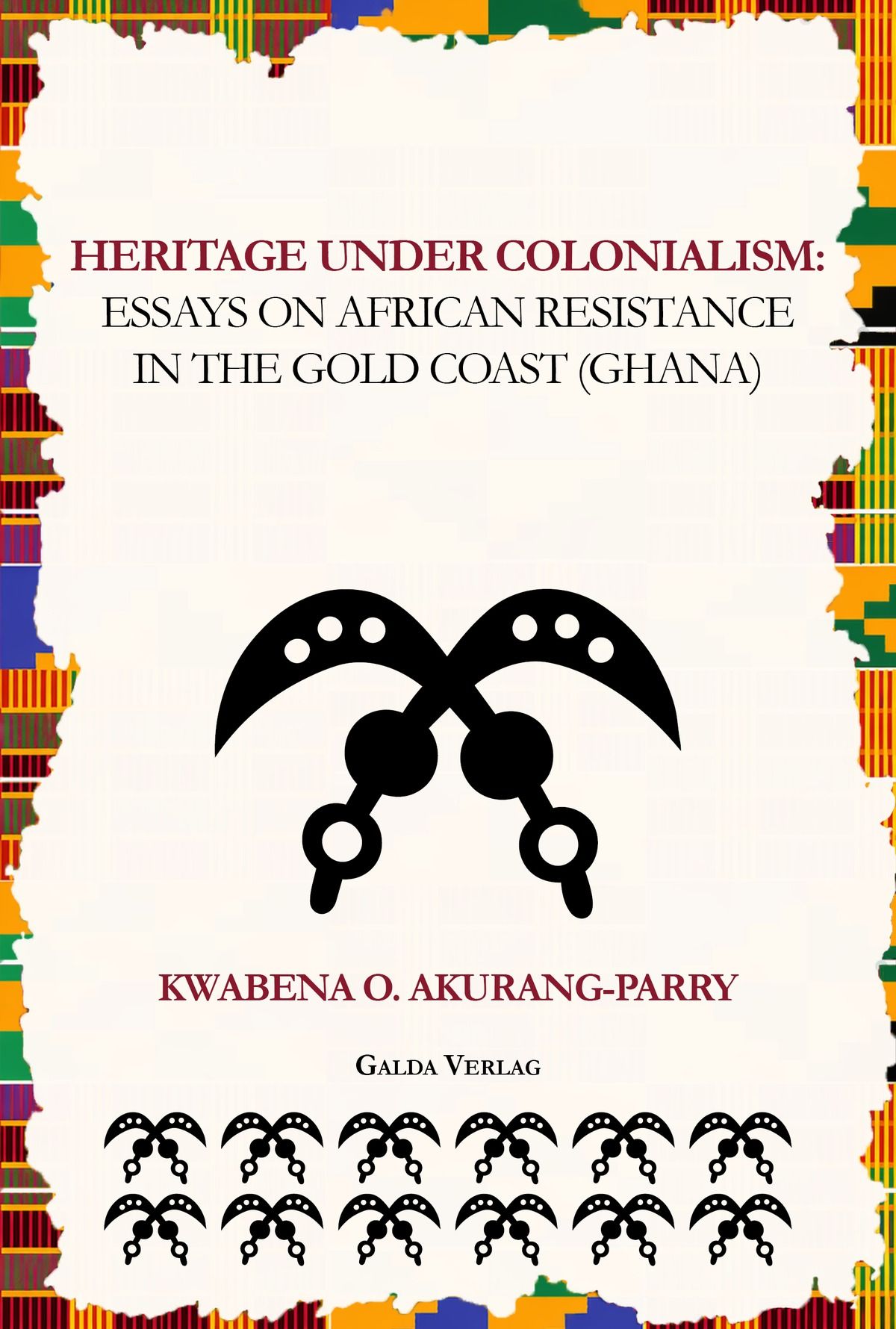
Heritage Under Colonialism: Essays on African Resistance in the Gold Coast (Ghana)
59,00 €
Your Legal Guarantee Rights

This collection of essays examines African agency and anticolonial resistance in the Gold Coast (present-day Ghana) during the late nineteenth and early twentieth centuries. Drawing on colonial records and the indigenous press, Kwabena O. Akurang-Parry reconstructs the rumour of the ritual murder of two hundred girls attributed to Asantehene Mensa Bonsu in 1881-82 and its consequences for colonial policy; the entanglement of gold mining, antislavery rhetoric, and anti-chieftaincy politics in Wassa Fiase, including the trial and exile of King Enimil Kwao; colonial responses to labour scarcity and the debate over imported Chinese labour; the protests of the African intelligentsia and the indigenous press against indirect rule; and the grassroots activism of elite women within the gender heritage of the Gold Coast. Rather than rehearsing the facts of subjugation, the essays foreground the variety, complexity, and coherence of African opposition to European colonial rule, and the strategies by which Africans defended their sovereign worldview and heritage. A study for scholars, students, and educators in African history, heritage studies, and colonial history.
Kwabena O. Akurang-Parry - poet, playwright, novelist, and essayist - is Professor of African History, Heritage Studies, and Global History. He teaches at the Department of History Education, University of Education, Winneba, Ghana. He received his PhD in African History and Comparative Slavery as well as a Post-Graduate Diploma in Contemporary Africa from York University, Toronto, Canada, and has held teaching and research positions in Canada, the USA, and Ghana.
T A B L E O F C O N T E N T S
DEDICATION i
ACKNOWLEDGEMENTS iii
CHAPTER 1: Introduction 1
CHAPTER 2: The Rumor of the Human Sacrifice of Two Hundred Girls by Asantehene [King] Mensa Bonsu in 1881–82 and Its Consequent Neo-Colonial Policy Implications and African Responses 19 Theorizing and Historicizing the Rumor of the Ritual Murder of 200 Girls 24
Spreading the Rumor of the Ritual Murder of 200 Girls 26
Efforts to Decipher the Rumor 29
Epistemology of the Rumor: Some African Perspectives 35
Rumors as a Means of Information-Gathering by the Colonial State 40
The Rumor and Its Implications for Colonial Policy toward Asante 43 Rumor and History and Rumor as History: A Content Analysis of the Rumor of 1881–82 46
Conclusion 52
CHAPTER 3: To Wassa Fiase for Gold: Rethinking Colonial Rule, El Dorado, Antislavery and Anti-Chieftaincy and AfricanResponses in the Gold Coast (Ghana), 1874-1895 55
Literature Review: El Dorado, Colonial Rule, and Antislavery 57
King Enimil Kwao’s Case: The Background 68
Anti-Slavery Policy, the Trial, and Consequences 71
The Politics of Exile and Freedom of King Enimil Kwao 77
Conclusion 85
CHAPTER 4: Making a Difference in Colonial Interventionism in Gold Mining in Wassa Fiase, Gold Coast (Ghana): The Activism of Two Women, 1874-1893 87 Literature Review: Women’s Activism 91
Colonialism and Goldmining in Wassa Fiase 96
Gold, Slavery, and Colonialism: Amba N’Kroma’s Social Activism and Effects 99
Gold and Colonialism: Protests by Queen Adwoa Arduah and the restoration of King Enimil Kwao to the throne 107
Conclusion 115
CHAPTER 5: “We Cast About for a Remedy:” Colonial Policy, Labor Scarcity, Chinese Labor, and African Opposition in Colonial Ghana 1874-1914 117 Comparative Perspectives 120
Historiographical Considerations 123
Early Proposals for the use Chinese Labor 125
The African Intelligentsia and Heritagizing African Work Ethic 129
The Chinese in the Gold Coast 138
Conclusion 143
CHAPTER 6: “Shocking Indignity to Aboriginal Sovereignty:” The African Intelligentsia and the Indigenous Press’ Protests against Indirect Rule in the Gold Coast (Ghana), ca. 1912-1920 145 African Intelligentsia’s Protest Politics: Sir Hugh Clifford’s Indirect Rule Policy 147
Vehicles of Protest: The Gold Coast Leader and The Gold Coast Nation 153
African Intelligentsia, the Local Press, and Anticolonial Protest Politics 157
Conclusion 169
CHAPTER 7: Aspects of Elite Women’s Grassroots Activism in Gender Heritage of the Gold Coast, (Ghana), 1874-90 171
Elite Women: Comparative and Historiographical Perspective 174
Elite Women’s Grassroots Political Activism 176
Pedagogical and Epistemological Agency: The “Ladies
Column” 181
Redefining Womanhood: Socializing, Networking, and Empowerment 188
Conclusion 191
BIBLIOGRAPHY 193
INDEX 213