
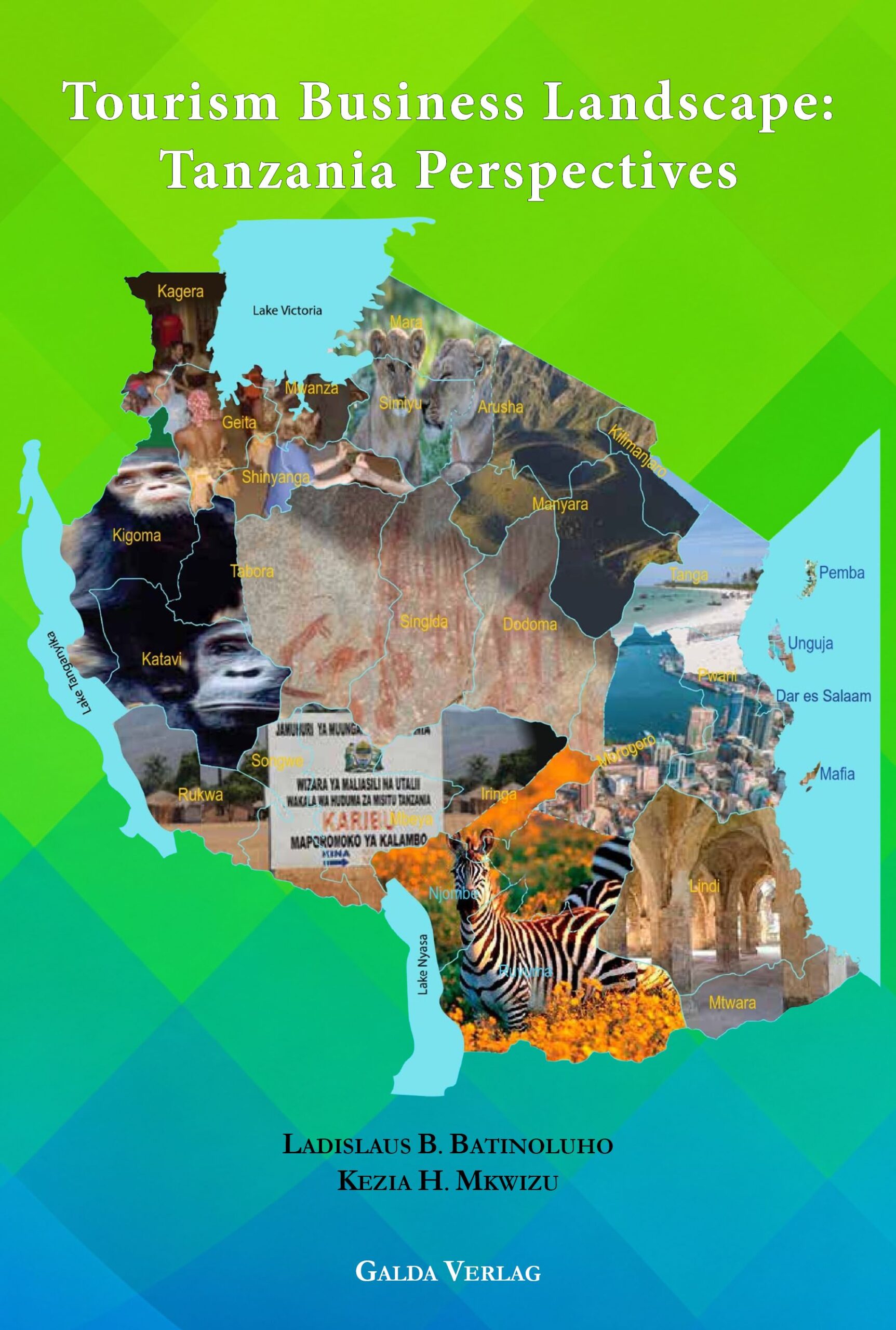
Tourism Business Landscape: Tanzania Perspectives
68,00 €
Your Legal Guarantee Rights

Tourism is a dynamic and continually evolving industry, necessitating sustained research and publications, particularly books, to inform, contextualize, and advance understanding of emerging and persistent issues within the sector. Tanzania is among the world’s most richly endowed destinations, possessing an exceptional array of tourism resources that span both cultural heritage (tangible and intangible) and diverse natural endowments. This book provides a comprehensive examination of the tourism business landscape in Tanzania, addressing critical thematic areas including tourist attractions, business incubation, coaching and mentorship, training needs assessment, tourism investment, the Tanzania Royal Tour Film, and the development of astrotourism. Comprising thirteen rigorously structured chapters, the volume offers analytical insights and evidence-based perspectives designed to enrich the knowledge base of tourism stakeholders, policymakers, practitioners, and learners, while contributing meaningfully to scholarly discourse and informed practice in Tanzania’s tourism sector.
Kezia H. Mkwizu, Ph.D. is a Tourism expert and an Independent Researcher, Trainer and Consultant in Tanzania. Her research interests are in advertising, domestic tourism, and national park novelty, experiences and enjoyment.
Ladislaus B. Batinoluho, Ph.D is a seasoned Tourism Expert and Scholar in Tanzania. His research interests are in tourism, astrotourism, conservation, socio-economic development, volunteerism, child labour, child rights, and inclusive education. | Kezia H. Mkwizu, Ph.D. is a Tourism expert and an Independent Researcher, Trainer and Consultant in Tanzania. Her research interests are in advertising, domestic tourism, and national park novelty, experiences and enjoyment.
C O N T E N T S
Dedication v
List of Tables xxv
List of Figures xxvii
Preface xxix
Acknowledgements xxxiii
Acronyms xxxv
CHAPTER ONE: INTRODUCTION 1
CHAPTER TWO: UNDERSTANDING OF TOURISM 5
2.1 Learning Outcome 5
2.2 Introduction 5
2.3 Meaning of Tourism 5
2.4 Evolution of Tourism 6
2.4.1 Pre-historic period travel: 1.8 MYA BC 6
2.4.2 Ancient time travel: 3rd – 8th Century 7
2.4.3 Middle Ages or Dark tourism: 15th -16th Century 8
2.4.4 Renaissance period tourism: 17th-18th Century 9
2.4.5 Industrial period tourism: 19th – 20th Century 9
2.4.6 Modern tourism: 21st Century 10
2.5 Types of tourism 10
2.6 Importance of Tourism 15
2.7 Types of tourists 16
2.8 Environmental Management 17
2.8.1 Improved Environmental Management and Planning 17
2.8.2 Environmental Awareness Raising 17
2.8.3 Protection and Preservation 18
2.9 Summary 18
2.10 Further Readings 18
2.11 Review Questions 19
CHAPTER THREE: TOURIST CIRCUITS IN TANZANIA 21
3.1 Learning Outcome 21
3.2 Introduction 21
3.3 Meaning of a Tourist Circuit 21
3.4 Qualities of a tourist circuit 22
3.5 Importance of Tourist Circuits 22
3.6 Existing Tourist Circuits in Tanzania 23
3.6.1 Northern Tourist Circuit 23
3.6.2 Southern Tourist Circuit 25
3.6.3 Western Tourist Circuit 25
3.6.4 Eastern Tourist Circuit 25
3.7 The importance of Proposed New Tourist Circuits 26
3.8 Summary 28
3.9 Further Readings 29
3.10 Review Questions 30
CHAPTER FOUR: TOURIST ATTRACTIONS IN TANZANIA 31
4.1 Learning Outcome 31
4.2 Introduction 31
4.3 Meaning of a Tourist Attraction 31
4.4 Types of Tourist Attractions 32
4.4.1 Man-made Tourist Attractions 32
4.4.2 Cultural Tourist Attractions 33
4.4.3 Natural Tourist Attractions 37
4.5 Summary 37
4.6 Further Readings 38
4.7 Review Questions 38
CHAPTER FIVE: TOURISM BUSINESS IN TANZANIA 41
5.1 Learning Outcome 41
5.2 Introduction 41
5.3 Status of Tourism in Tanzania 42
5.4 Tourism Facilities in Tanzania 46
5.5 Physical and social mapping of tourism sub sectors 47
5.6 Key Players in the Tourism Sector 51
5.7 Status of the Accommodation Sector 52
5.8 Current Market Details 55
5.8.1 Hotels 55
5.8.2 Guest Houses 57
5.8.3 Lodges 58
5.8.4 Tented Camps 58
5.8.5 Other accommodation facilities 59
5.9 Tour operators 61
5.10 Tour Guides 62
5.11 Arts and Crafts 63
5.12 Event organisers in Tanzania 66
5.12.1 Challenges of MICE in Tanzania 67
5.12.2 Types of Events 68
5.12.3 Other Types of Event Tourism 69
5.12.4 Types of Meetings 69
5.12.5 Incentive Travel for Business Trips 69
5.12.6 Conventions 70
5.12.7 The Influence of MICE in Tourism Development 71
5.13 Points of Entry or Departure to Tanzania 72
5.14 Links between the tourism sub-sectors and their responsibilities 74
5.15 Intermediaries 75
5.16 Weak capacity to consolidate and aggregate to retain or attract new businesses 76
5.17 Weak capacity to build alliances and networks 76
5.18 Limited value addition 77
5.19 Market and Competitor Analysis 77
5.20 Market Share 78
5.21 Business operations footprint 78
5.22 Pricing 78
5.23 Quality 79
5.24 Building Linkages 81
5.25 Summary 82
5.26 Further Readings 83
5.27 Review Questions 84
CHAPTER SIX: TOURISM BUSINESS CLUSTERS 87
6.1 Learning Outcome 87
6.2 Introduction 87
6.3 Tourism Business Clusters 88
6.4 The Concept of Tourism Business Clusters 88
6.5 Tourism Performance during the COVID-19 Pandemic in Tanzania 89
6.6 MSMEs in Tourism Industry in Tanzania 90
6.7 Tourism clusters context 92
6.8 Tourism business clusters 93
6.9 Clusters in the tourism industry 93
6.10 Previous efforts for establishing tourism clusters in Tanzania 94
6.11 The organisation of tourism players in Tanzania 95
6.12 Comparison with other countries 95
6.13 Tourism clustering approach 96
6.14 Understanding of the existing situation 97
6.15 Legal and policy issues 98
6.16 Financing tourism business 98
6.17 Collaboration among tourism players 98
6.18 Tourism business operations 99
6.19 Market and competitor analysis 99
6.20 Awareness of legal and policy framework 99
6.21 Formation of tourism business clusters 100
6.22 Proposed Model for Tourism Clusters in Tanzania 101
6.23 Linkage of the Cluster from local to national level 102
6.24 Summary 103
6.25 Further Readings 104
6.26 Review Questions 104
CHAPTER SEVEN: TOURISM BUSINESS INCUBATION 109
7.1 Learning Outcome 109
7.2 Introduction 109
7.3 Tourism Business Incubation 109
7.4 MSMEs in the Tourism Sector in Tanzania 111
7.5 Factors affecting the development of Incubation Centres 112
7.6 Experience in Incubation Centres in other countries 113
7.6.1 Creative Accelerators for Sustainable Tourism -Europe 113
7.6.2 Tourism Incorporated – Rwanda 114
7.7 Theoretical Framework for Tanzania 114
7.8 The proposed location for tourism incubation centres 115
7.9 Proposed process for setting up Incubation Centres in Tanzania 116
7.9.1 The Incubation Services 116
7.9.2 Formal training sessions 117
7.9.3 Coaching and mentorship 117
7.9.4 Developing information packs 117
7.9.5 Stakeholder interface 118
7.9.6 Networking platforms 118
7.9.7 Operational exposure 118
7.9.8 Proposed Incubation Model for Tanzania 119
7.9.9 Tourism MSMEs Incubation Model 119
7.9.10 Proposed Funding Model 120
7.10 Summary 120
7.11 Further Readings 122
7.12 Review Questions 122
CHAPTER EIGHT: TOURISM COUCHING AND MENTORSHIP 125
8.1 Learning Outcome 125
8.2 Introduction 125
8.3 Tourism Couching and Mentorship 125
8.4 Definition of Business Couching and Mentorship 128
8.5 Couching and Mentorship approach 129
8.6 Recruitment of MSMEs for Mentorship 130
8.7 Hold Mentee Orientations 130
8.8 Ongoing interaction 131
8.9 Graduation and follow up 131
8.10 Approach Evaluation 131
8.11 Challenges facing MSMEs in Tourism Sector in Tanzania 131
8.12 Process for setting up mentorship 132
8.13 Other findings 133
8.14 Sustainability for the Tourism Cluster Mentorship Approach ..134
8.15 Need identification 134
8.16 Determine approach goals and expected outcomes for the mentoring approach 134
8.17 Summary 135
8.18 Further Readings 136
8.19 Review Questions 136
CHAPTER NINE: TRAINING NEEDS ASSESSMENT IN TOURISM SECTOR 139
9.1 Learning Outcome 139
9.2 Introduction 139
9.3 Training Needs in Tourism Sector 140
9.4 Characteristics of the Tourism Industry 142
9.5 Training Needs Assessment in the tourism industry 142
9.6 Conceptual Framework 144
9.7 Respondents’ data disaggregated by gender and age 146
9.8 Respondents in the Tourism Circuits 147
9.8.1 Knowledge, skills, and competencies required by tourism MSMEs to carry out each visitor journey phase task challenge effectively 147
9.8.2 Current and future roles to be played by the tourism MSMEs in tourism development 149
9.9 Competency assessment of the tourism MSMEs in Tanzania 151
9.10 Entrepreneurship and product development competencies 151
9.11 Customer needs assessment 152
9.12 Tourism operations management 152
9.13 Financial record-keeping 152
9.14 How to access loans 153
9.15 Tourism marketing and sales management 153
9.16 Creating customer loyalty programs 153
9.17 Managing multi-culturalism in the tourism business 153
9.18 Use of websites and social media in tourism marketing 154
9.19 Use of digital tourism booking platforms such as trip advisor .154
9.20 Understanding the importance of joining tourism associations 154
9.21 Researching and planning tours 155
9.22 Corporate Social Investment 155
9.23 Training and capacity-building interventions that could strengthen the capabilities of MSMEs in tourism development 155
9.24 Summary 156
9.25 Further Readings 158
9.26 Review Questions 158
CHAPTER TEN: INVESTMENT POTENTIALS IN TOURISM SECTOR IN TANZANIA 163
10.1 Learning Outcome 163
10.2 Introduction 163
10.3 Enabling Environment for Investment 163
10.4 Key Government Institutions 164
10.5 Investment Opportunities 164
10.5.1 Tanzania Wildlife Management Authority 165
10.5.2 Tanzania National Parks 165
10.5.3 Ngorongoro Conservation Area Authority 165
10.5.4 Tanzania Forest Service Agency 166
10.6 Summary 167
10.7 Further Readings 167
10.8 Review Questions 168
CHAPTER ELEVEN: TOURISM STAKEHOLDERS AND TANZANIA THE ROYAL TOUR FILM 169
11.1 Learning Outcomes 169
11.2 Introduction 169
11.3 Overview of Tanzania the Royal Tour Film 170
11.4 Tourism business in Tanzania 172
11.5 Tourism Performance during the COVID-19 Pandemic in Tanzania 173
11.6 Drive and Cognitive Interest 174
11.7 Challenge ahead of Tanzania the Royal Tour Film 175
11.8 Films and Travel Decision 175
11.9 Film-induced Tourism 176
11.10 Relation between Film and Tourism 177
11.11 Impacts of Film-Induced Tourism 178
11.12 Socio-economic and Cultural impact of Film induced Tourism 178
11.13 Tourism stakeholders in Tanzania 179
11.14 Level of awareness on the Tanzania Royal Tour Film 180
11.15 Level of Awareness by Sub-sector 181
11.16 Level of preparedness for handling tourists 182
11.17 Capacity Building on Tourism and Hospitality Issues 183
11.18 Proposed Model for scaling up Tanzania the Royal Tour Film 183
11.19 Tourism Players by Policy and Legal Awareness 184
11.20 Conclusion and Recommendations 185
11.21 Developing a comprehensive strategy for the implementation of the Tanzania Royal Tour Film 185
11.22 Promoting Tanzania’s tourism attractions in traditional and non-traditional tourist source countries 186
11.23 Engagement of Competent and Experienced Tanzanian Tourism Professionals 186
11.24 Allocation of adequate resources 186
11.25 Promotion of other Tanzania’s tourism attractions and investment potentials 187
11.26 Awareness 187
11.27 Monitoring and Evaluation 187
11.28 Practical Implications 188
11.29 Direction for Future Research 188
11.30 Summary 188
11.31 Further Readings 189
11.32 Review Questions 189
CHAPTER TWELVE: HINDRANCES OF ASTRO-TOURISM DEVELOPMENT IN TANZANIA 193
12.1 Learning Outcome 193
12.2 Introduction 193
12.3 Meaning of Astro-tourism 193
12.4 Contribution of Astro-tourism in the tourism sector 195
12.5 Factors affecting Astro-tourism development 199
12.6 Importance of Astro-tourism 199
12.7 Tanzania’s competitive advantage for Astro-tourism 200
12.8 Need of Astro-tourism in Tanzania 202
12.9 Status of Astro-tourism in Tanzania 203
12.9.1 Legal and Policy Framework 204
12.9.2 Training on Astro-tourism 204
12.9.3 Lack of coordination 204
12.9.4 Lack of infrastructure 205
12.9.5 Lack of awareness of Astro-tourism among the residents 205
12.9.6 Lack of awareness of Astro-tourism among domestic and inbound visitors 206
12.9.7 Opinions over the lack of Astro-tourism in Tanzania 207
12.9.8 Problem of light pollution 208
12.9.9 Demand for Astro-tourism Products 208
12.9.10 Expression of returning visitors and if Astro-tourism products were introduced in Tanzania 209
12.9.11 Astro-tourism services among Tourism Players 210
12.10 Conclusion and Recommendations 210
12.10.1 Conclusion 210
12.10.2 Recommendations 212
12.10.3 Direction for future research 212
12.10.4 Summary 212
12.11 Further Readings 213
12.12 Review Questions 213
CHAPTER THIRTEEN 217
Conclusion 217