
Early Papua New Guinea Writers – PDF
Early Papua New Guinea Writers – PDF
| Author | |
|---|---|
| ISBN | |
| Publication Date | April 15, 2026 |
| Size | |
| No. of Pages | 444 |
€38.99
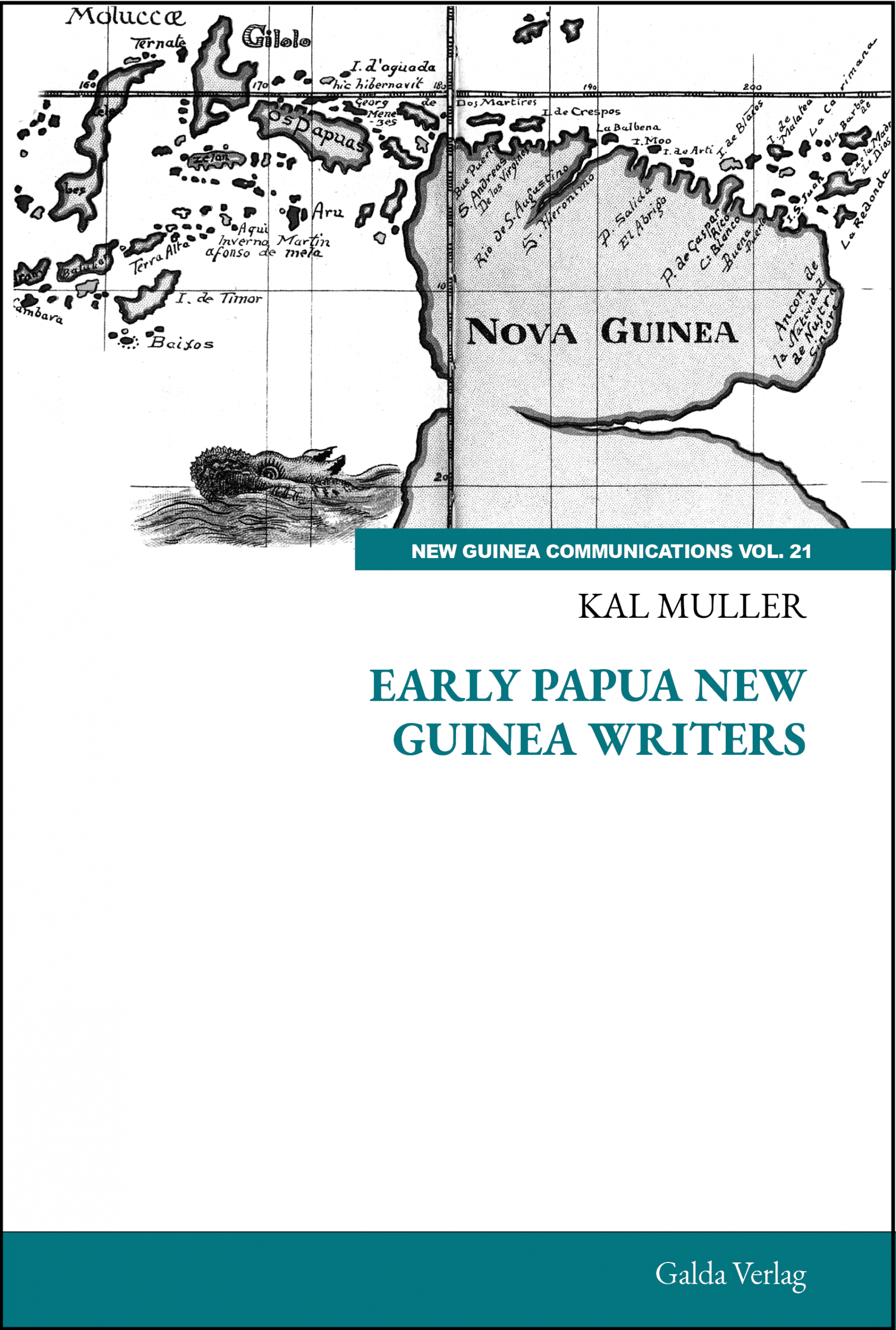
The early authors who published in Papua New Guinea were accomplished writers who were excellent storytellers. Led in 1970 by Vincent Eri’s The Crocodile, Ignatius Kilage followed in 1980 with My Mother Calls Me Yaltep, in a book that follows the protagonist from early childhood through all the major events of his life, including schooling, initiation, courtship, time spent in Port Moresby and on a plantation, and ending with Papua New Guinea’s (PNG) undergoing rapid political changes. The following chapter covers the life of Michael Somare, the politician who is considered the ‘father of the nation’ for his espousal of his country’s independence. This chapter is based on Somare’s autobiography, and covers his tribal initiation, the beginnings of his political activism, and the 1972 election by which he became Chief Minister, and thanks to pressures he was able to obtain independence for PNG.
The following chapter is completely based on Albert Maori Kiki’s autobiography, Ten Thousand Years in a Lifetime. It starts with his tribal beginnings and initiation, his entry into the white man’s world, growing political tensions, and the founding of the political Pangu Party that led to independence. Paulias Matame’s My Childhood in New Guinea was deliberately written in simple English for wide dispersal, especially within New Guinea to show the long evolution of a man of humble tribal origins who ended up as the Governor-General of PNG from 2004 to 2010.
| Author | |
|---|---|
| ISBN | |
| Publication Date | April 15, 2026 |
| Size | |
| No. of Pages | 444 |
About the Author
Dr Muller spent 22 years working and living with two Papuan groups, allowing him access to excellent relations with not just the people but also prominent academics and scientists and their resources.
Table of Contents
1
Introduction………………………………………………………………..1
•Nigel Krauth: Unfolding like petals. The developing definition of the writer’s role in modern PNG literature
•Gilian Gorle: Writing in English: Freedom or Frustration? Some views from PNG. (Written in 1992)
• Russel Soaba: The Writer’s Place in a Difficult Society
•Regis Tove Stella: PNG Literature at the Crossroads: Islands, Languages, and Cultures
2
Early Papua New Guinea Writers……………………………….11
• Vincent Eri’s The Crocodile
• Hoiri and the crocodile
• Final triumph of the ‘mesiri’
• Crocodiles and Crocodiles
• White man’s clever tricks
•Colonialism and Culture Fragmentation by S.E. Winduo
• Hoiri’s early life and later evolution
•Francis Devlin-Glass: Between Two Cultures. Interpreting Vincent Eri’s The Crocodile
•Steven E. Winduo: Colonialism and Cultural Fragmentation
3
Kilange, I. 1980. My Mother Calls Me Yaltep……………..33
• Chapter One: Early Childhood
• Chapter Two: The First Census
• Chapter Three: The First School
• Chapter Four: Life With the Grandparents
• Chapter Five: Disturbed Times
• Chapter Six: Puberty and Adolescence
• Chapter Seven: Initiation
• Chapter Eight: Courtship
• Chapter Nine: Going Away to the Coast
• Chapter Ten: Homecoming
• Chapter Eleven: Marriage Rituals
• Chapter Twelve: Life on a Plantation
• Chapter Thirteen: News From Home
• Chapter Fourteen: Learning to Read
• Chapter Fifteen: Rapid Political Changes
4
Michael Somare: The Father of the Nation…………………55
• The second initiation
• Political activism
• MS as the leader of the opposition Pangu Pati
• Overseas Travel Broadens MS’s Horizons
• The 1972 Elections
• MS Becomes Chief Minister
• Regional Pressures
• Independence and the Future
5
Albert Maori Kiki: Ten Thousand Years in a Lifetime….75
• Chapter One: Growing up in Papua
• Chapter Two: Orokolo
• Chapter Three: Initiation
• Chapter Four: Entering the White Man’s World
• Chapter Five: Fiji
• Chapter Six: Fighting Years
• Chapter Seven: The Buka Affair
• Chapter Eight: Growing Tensions
• Chapter Nine: Pangu Pati
• Chapter Ten: Elections
6
Paulias Matame: My Childhood in New Guinea…………..97
• Chapter One: My Birth
• Chapter Two: My Earliest Years
• Chapter Three: My Mother’s Death
• Chapter Four: The Days of Mourning
• Chapter Five: A New Wife Arrives
• Chapter Six: I Leave Home
• Chapter Seven: Life in the Men’s House
• Chapter Eight: Learning Magic
• Chapter Nine: My First Pig Hunt
• Chapter Ten: Boys’ Games
• Chapter Eleven: The First Christian Pastor Appears
• Chapter Twelve: The First Christian Service
• Chapter Thirteen: The First School Days
• Chapter Fourteen: The Pastor Gains His Way
• Chapter Fifteen: The First Football Match
• Chapter Sixteen: The Second World War Comes to the Village
• Chapter Seventeen: We Live in a Dugout
• Chapter Eighteen: The End of the War
• Chapter Nineteen: I Go to Primary School
• Chapter Twenty: My Last Day at Primary School
• Chapter Twenty-one: I Go to Secondary School
• Chapter Twenty-two: I Leave New Britain on My First Flight
• Chapter Twenty-three: I Become a Teacher
• Chapter Twenty-four: The Cargo Cult
• Chapter Twenty-five: Teaching the Children to Learn
• Chapter Twenty-six: I Serve My Developing Country in a New Role
7
Ashcroft, Bill 2012. The Flesh Of Parable:
Russell Soaba’s Maiba………………………………………………121
• Maiba as the symbol in a parable
• The power of the English language
8
Soaba, R. 1973. Natives Under The Sun ……………………125
• Soaba, R. 1973. Old Man in the Balus pp. 105-108.(In) Beier, U. (ed.) Black Writing from New Guinea. University of Queensland Press.
Related Books
The Highlands of West New Guinea
€45.00

Political Dynasty in Mandaluyong City, Philippines
€35.95

African Languages, Linguistics, and Literatures: Exploring Global Interdisciplinary Research Trends in the Humanities (ILM Volume 1)
€19.90


