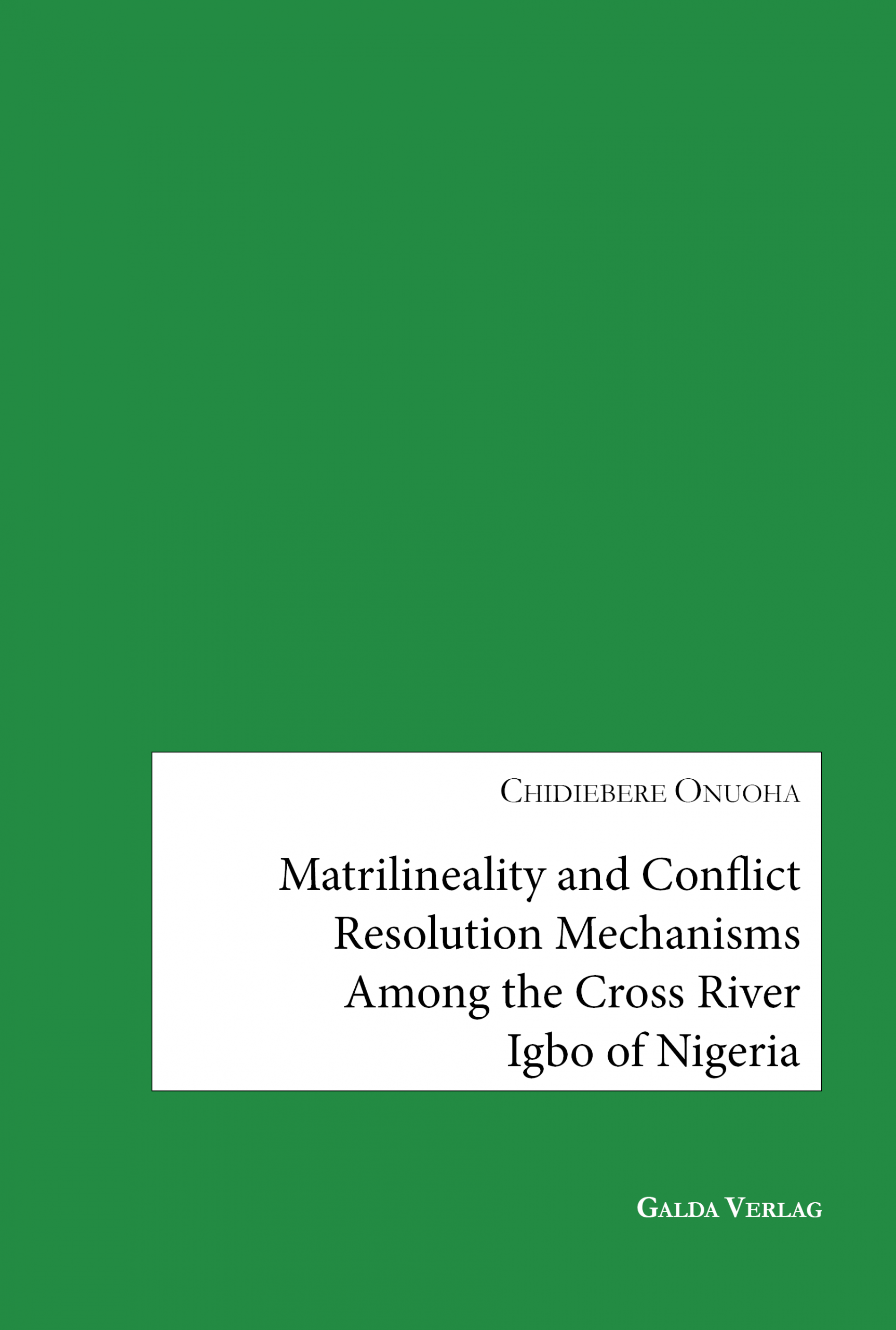
Matrilineality and Conflict Resolution Mechanisms Among the Cross River Igbo of Nigeria – PDF

Matrilineality and Conflict Resolution Mechanisms Among the Cross River Igbo of Nigeria – PDF

Author

ISBN

Publication Date

February 5, 2026

Size

No. of Pages

196

46.99

This book represents the culmination of three years of rigorous doctoral research and comprehensive fieldwork on conflict resolution among the matrilineal Cross River Igbo of Nigeria from pre-colonial times to 1996. It explained matrilineaty and reveals how these communities developed unique institutions for resolving family, social, political, religious, and communal disputes systems that were resilient even in the face of colonial rule, modern courts, and faith-based interventions. The book stresses that although these communities are matrilineal, leadership remained in the hands of men, with women excluded from core judicial roles. The book also uncovers how colonial influence gave rise to chieftaincy, religious conflicts, as well as delay and capital- intensive processes in conflict resolution processes that continue to shape the region. By examining both continuity and change, the book examines the strengths and weaknesses of both indigenous and alien institutions and processes of conflict resolution mechanisms and proposes an all-inclusive hybrid model of conflict resolution for today’s diverse societies. Furthermore, the time frame of this book is significant: the pre-colonial period represents fully indigenous institutions and processes of conflict resolution mechanisms, while 1996 was the year that the government resolved a prolonged conflict in the area under review using traditional and alien institutions.

Author

ISBN

Publication Date

February 5, 2026

Size

No. of Pages

196

About the Author

Chidiebere Onuoha holds a Ph.D., M.A., and B.A. in History and International Relations from Abia State University, Nigeria. He also obtained a Postgraduate Diploma in Education from the National Open University of Nigeria (NOUN) and is a registered, certified, and licensed teacher with the Teachers Registration Council of Nigeria (TRCN). Dr. Onuoha currently lectures in the Department of History and International Studies at Kingsley Ozumba Mbadiwe University, Imo State. Dr. Onuoha plays a leading role in community-oriented initiatives through his NGO, Christian Organisations for the Guidance of African Youth (COGAY), which he founded in 2011 to promote youth rehabilitation, vocational training, and lifelong learning.

Table of Contents

TABLE OF CONTENTS

Dedication i

Acknowledgements iii

Preface v


Introduction 1

Matrilineal Cross River Igbo: Migrations and Socio Political Institutions 13

Understanding Matrilineality and Its Implications for Conflict Resolution 27

Precolonial Institutions and Processes of Conflict Resolution in Matrilineal Communities  39

Conflict Resolution Practices among Matrilineal Communities since 1900  83

Conflict Resolution Among Matrilineal Communities during the Post-Colonial Era, 1960–1996  105

Institutional Resilience and Weaknesses in Conflict Resolution among Matrilineal Communities  129


Summary and Conclusion 151

Sources and Bibliography 157

Related Books

Jürgen Habermas Concept of Democracy and Implication for the Nigeria

49.00

Corporate Governance and Audit Quality in Nigerian Banks (PDF)

39.99

The Freedom of Information Act: A Catalyst for Public Governance Advancement in Nigerian Public Service Institutions (PDF)

29.99

The Freedom of Information Act: A Catalyst for Public Governance Advancement in Nigerian Public Service Institutions

39.00
Scroll to Top