
Identity, Civilisation and Contribution to National Development
Identity, Civilisation and Contribution to National Development
| Author | |
|---|---|
| ISBN | |
| Publication Date | September 5, 2026 |
| Size | |
| No. of Pages | 76 |
| Binding | Paperback |
€36.00
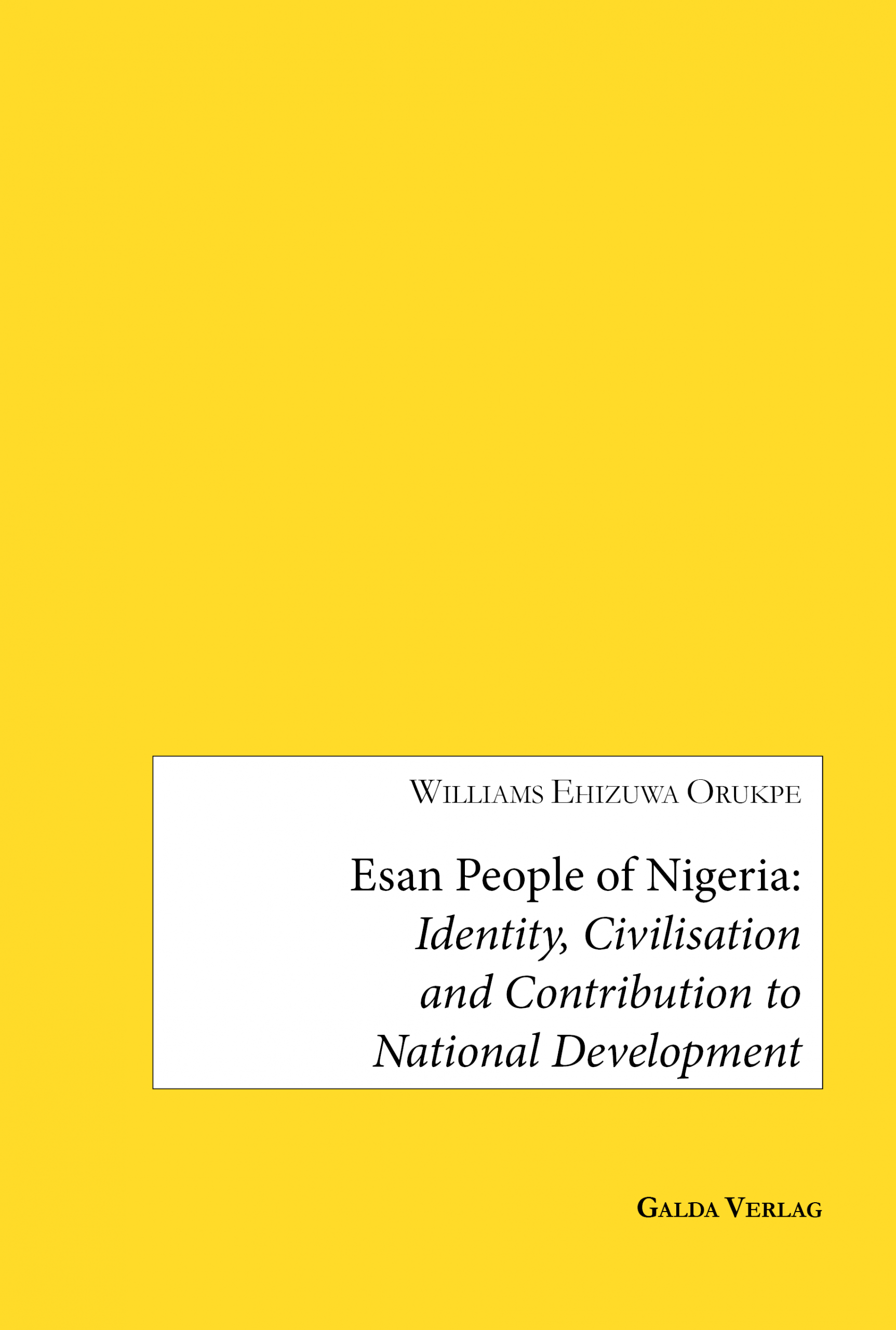
The Esan people of Nigeria are an autochthonous African tribe. Hence, this book challenges the dominant Benincentric tradition of Esan origin in Edoid studies. Submersion and collectivisation in Edoid historiography engendered the view that Esan people migrated from Benin Kingdom in the 15th century. Drawing on archaeological and linguistic evidences, this study demonstrates Benincentrism to be ahistorical. It traces Esan origin beyond the 15th century. The Esan moats constructed by the indigenous people of Esanland and the Esan language that have been in existence in the region for thousands of years justifies this. In pre-colonial Nigeria, environmental determinism accounted for the emergence of agriculture as the economic mainstay of Esan people. It was complemented by indigenous industrial activities and trade. Through these activities and exchanges, Esan people contributed to the socio-economic development of pre-colonial Nigerian societies. Esan economic viability later triggered Benin imperialism and British colonialism. Under colonial rule, Anthony Enahoro an Esan Chieftain moved the motion for Nigeria’s self-government and became the father of modern Nigeria. Since this development, Esan people have continued to make laudable contributions to nation and state building in Nigeria.
| Author | |
|---|---|
| ISBN | |
| Publication Date | September 5, 2026 |
| Size | |
| No. of Pages | 76 |
| Binding | Paperback |
About the Author
Williams Ehizuwa Orukpe, Ph.D. is a Senior Lecturer in the Department of History and International Studies, University of Benin, Benin City, Nigeria. His research interests are in Esan Studies, development economics in Nigeria, and international relations.