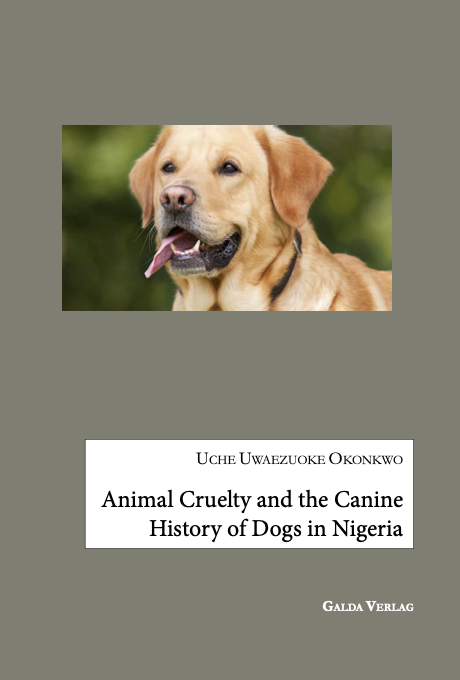
The manner in which animals are killed, the revenue accrued from animals, and the ethno-religious differences emanating from rearing and consuming animals are generally referred to in this book as Slaughter House Politics. Animal cruelty and Animal Rights are yet to occupy eminence in Nigerian historical scholarship despite numerous laws enacted since colonial times. Unfortunately, historians profess a multi-disciplinary approach to historical scholarship which is not strictly followed, especially in animal-human relations and other areas of science. A dog is an animal of social and economic importance. It is both a pet animal as well as a carnivorous animal. As a result, the government, since colonial times, has enacted laws such as the Dog Ordinance to guide society on how to use, train, and guard dogs. The various laws relating to animal-human relations have always been contravened. Dogs-related diseases, such as rabies, have kept medical experts busy and have caused many harms and deaths. There is a need, therefore, to interrogate medical research that relates to dogs as well. Furthermore, the selling and buying of dogs, intergroup relations, and cuisines related to dog meat are increasing daily. Dogs are also an important weapon of national security, and as such, this book accommodates both the political, social, and economic discourses related to dogs and other animals, especially within the confines of existing laws.
About the Author
UCHE UWAEZUOKE OKONKWO holds a PhD degree in History and Strategic Studies from the University of Lagos, Nigeria. He was a Becker-Friedman Institute Visiting Senior Research Associate at the University of Chicago, USA, and a Professor of Social and Imperial History in the Department of History and International Studies, University of Nigeria, Nsukka. He has authored over 12 books and has received travel grants from esteemed organizations such as the United Nations Environment Programme, Spencer Foundation, Volvo Foundation, University of Bayreuth African Multiple Cluster, and the Dutch Foundation for the History of Technology, and the Society for the History of Technology in Africa (SHOT). He is a widely travelled academic and has presented academic papers and chaired conference panel sessions in the USA, Cameroon, Kenya, Tanzania, Ghana, Spain, Senegal, Luxembourg, the Netherlands, and other countries. He has over 100 published articles in national and international journals.
Table of Contents
TABLE OF CONTENTS
Chapter 1: Historical Contexts on Animal Cruelty in Nigeria 1
Animal Cruelty: A Definition 4
Dog Ordinances 8
Post Colonial Slaughtering of Dogs in Nigeria 11
Dogs and Bio Medical Researches 14
Bestiality and Animal Abuse in Nigeria 15
Historicizing the Philosophical Foundation of Animal Cruelty 17
Chapter 2: Animals, Animal Diseases and Wildlife Preservation Laws 23
The Outbreak of Animal Diseases in Colonial Nigeria 28
The Control of the Spread of Animal Diseases in Nigeria 29
Chapter 3: Totems, Archaeology and Animal Cruelty Questions 33
Totems, Archaeology and Animal Cruelty 35
Colonial Experiences and the Question of Animal Cruelty 38
Chapter 4: Dogs: Neglected themes in Nigerian Social
and Economic History 41
Demography and Types of Dogs in Nigeria 43
Dog As A Social and Economic Animal 44
Dog Business, Cuisine and Inter Group Relations 47
Chapter 5: Rabies in Nigerian Social History 49
Rabies in Historical Perspectives 51
Vaccination Against Rabies in Predominately Northern and Few Areas of Southern Nigeria 54
Chapter 6: Conclusion 61
Notes 65
Bibliography 91